

Avoid Consent Delays on $2,500–$8,000 Hot Water Cylinder Upgrade NZ

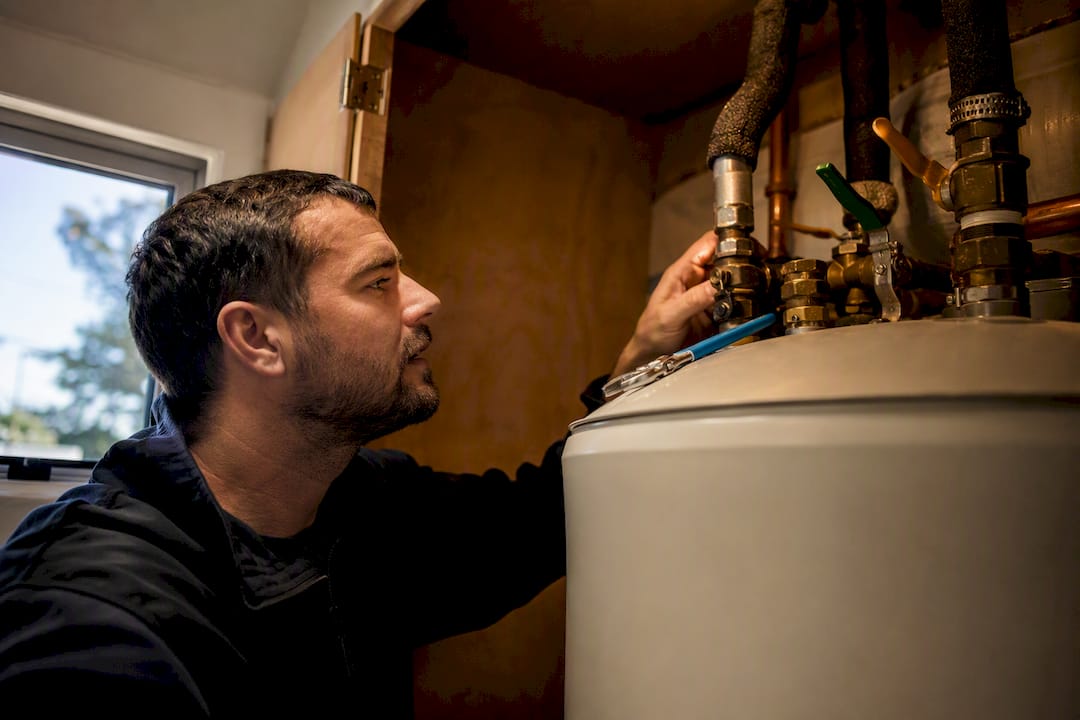
For most New Zealand homes, the best hot water cylinder upgrade is either a correctly sized heat pump retrofit for energy savings or a MEPS-compliant mains-pressure replacement for lower upfront cost and better water flow. Whichever route you choose, the work must be carried out by a registered plumber or certifying tradesperson, and installed costs typically run from $2,500 for a straightforward like-for-like swap to $8,000 or more for a full heat pump conversion.
TL;DR:
Mains-pressure replacements are the quickest and cheapest upgrade option but require pipework and valve inspections to handle higher pressure safely.
Heat pump retrofits can reduce electricity use by 60% to 75%, but performance heavily depends on correct sizing and regional winter temperatures.
Solar top-ups work well in warmer months but need backup heating for winter, and installation costs start around $6,000.
Upgrading from low-pressure to mains pressure or installing heat pumps often requires consent if changes involve new pipework, repositioning, or heat source alterations.
The overall cost for installation varies from about $2,500 for simple replacements to over $8,000 for heat pump systems, with site-specific factors influencing final prices.
Table of Contents
Which cylinder type suits your home: pros, cons and trade-offs
What does a hot water cylinder upgrade cost in NZ, and how long does it take?
What NZ compliance rules apply to a hot water cylinder upgrade?
How do low-pressure to mains and heat pump retrofits actually work?
Stainless steel vs copper: which cylinder material lasts longer?
What actually matters when you upgrade your hot water cylinder
What are the main hot water cylinder upgrade options in NZ?
Once you’ve decided your old cylinder needs replacing, the real question is which system suits your household, your roof, and your power bill. Four upgrade routes dominate the New Zealand market, and each one solves a different problem.
Mains-pressure replacement: swaps a low-pressure gravity-fed cylinder for a mains-pressure unit, giving you decent shower pressure on two taps at once. Suits homes still running old low-pressure setups and wanting a straightforward upgrade without touching the heat source.
Heat pump retrofit: uses a compressor to extract heat from the air rather than generating it directly, cutting running costs substantially. Suits households with higher hot water demand and a sheltered spot for the outdoor unit.
Solar top-up: pairs solar collectors with an existing or new cylinder to preheat water before it hits the element. Suits north-facing roofs and households wanting to trim summer power use, though it rarely covers winter demand alone.
Gas continuous flow or wetback: gas systems heat water on demand; wetbacks use a wood burner’s heat exchanger. Suits homes already on reticulated gas, or properties with a solid-fuel burner running most of winter.
A like-for-like mains-pressure swap, done by a registered plumber using the same heat source and location, often avoids a building consent altogether. Anything that changes the heat source, adds a wetback, or repositions the unit tends to need council sign-off. Running costs generally fall as you move from electric resistance heating toward heat pump and solar, but so does the complexity of getting the installation right.
Which cylinder type suits your home: pros, cons and trade-offs
Every upgrade path comes with a catch worth understanding before you sign a quote.
Heat pump cylinders come in two configurations: integrated units, where the compressor sits on top of the tank, and split systems, where the compressor sits outside and connects via refrigerant lines to an indoor tank. Split systems handle colder climates better because the compressor isn’t drawing heat from a cold roof space or garage. Efficiency is measured by coefficient of performance (COP), and hot water heat pumps typically use 60% to 75% less electricity than conventional electric cylinders, with COPs commonly sitting above 3 under standard conditions. A COP of 3 means every kilowatt of electricity you put in returns three kilowatts of heat. That figure drops in cold snaps, so installers should size the unit for your region’s winter temperatures, not just the brochure spec.
Mains-pressure replacement sounds simple but often isn’t. Existing pipework, especially older copper runs sized for low pressure, may need checking or upgrading before it can handle mains pressure safely, and pressure-relief valves and mixers frequently need replacing alongside the tank.
Solar top-up systems perform well from spring through autumn but contribute little on overcast winter days, so you’ll still need a backup element or boost cycle. Panels and glazing need occasional cleaning to keep collecting efficiently.
Gas and wetback systems deliver near-instant hot water but require proper flueing and venting to manage combustion by-products safely, and any gas work must be done by a certified gasfitter.
Most cylinders carry warranties of 5 to 15 years depending on the tank material and brand, with heat pump compressors sometimes warrantied separately from the tank itself.
Integrated heat pumps: simpler install, weaker cold-climate performance.
Split heat pumps: better winter output, higher install cost.
Mains-pressure swap: fastest and cheapest, but pipework and valves need checking.
Solar top-up: strong summer savings, needs a backup heat source.
Gas/wetback: instant hot water, strict venting and certification rules apply.
Pro Tip: Ask your installer what COP the heat pump will realistically deliver in your region’s average winter temperature, not the peak-condition number on the spec sheet.
What does a hot water cylinder upgrade cost in NZ, and how long does it take?
Installed prices vary more than most homeowners expect, mostly because the tank itself is rarely the biggest line item.
A like-for-like mains-pressure swap using a similar-sized tank in the same location typically costs a few thousand dollars installed. A heat pump retrofit generally lands in the mid to high thousands of dollars, depending on whether it’s an integrated or split system and whether electrical upgrades are needed. Solar-assisted setups often start around $6,000 once you include collectors, tempering valves, and pump wiring. Gas conversions vary widely depending on whether a gas line already runs to the property.
Several factors push the price up or down:
Tank size and type (a larger household needs a bigger cylinder, which costs more).
Converting from low-pressure to mains pressure (valves, pipework, mixers).
Electrical work, particularly for heat pumps needing dedicated circuits, which sometimes means a switchboard upgrade if the existing board is at capacity.
Relocating the cylinder to a new position, which adds pipework and possibly consent requirements.
Access difficulty, particularly for roof-space or under-floor cylinders.
Timeline-wise, expect a site assessment first, where the installer checks pipework, pressure, electrical capacity, and access. A quote usually follows within a few days. Ordering the unit can take one to three weeks depending on stock, and the physical install for a straightforward swap often takes a single day. Anything involving consent, rewiring, or repositioning stretches that out to several weeks once council processing and final certification are factored in.
What NZ compliance rules apply to a hot water cylinder upgrade?
New hot water systems in New Zealand must meet Building Code clause G12, which sets out water supply and safety requirements. G12 requires stored water to reach at least 60°C daily to control Legionella bacteria, while water delivered to taps used for personal hygiene is generally limited to 50°C through a tempering valve to prevent scalding. That combination, hot storage plus a tempering device at the point of use, is standard on nearly every compliant installation.
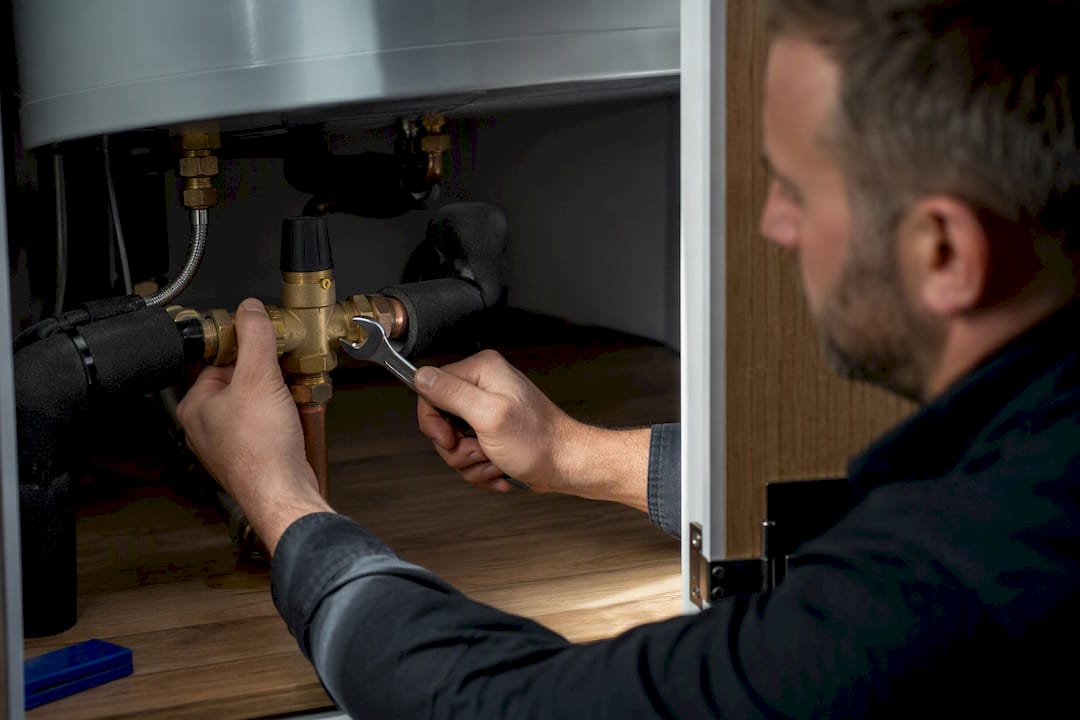
Before buying a new electric cylinder, check it against EECA’s list of New Zealand MEPS-compliant electric storage water heaters. Minimum Energy Performance Standards exist to stop underperforming imported models being sold here, and a non-compliant unit can’t legally be installed as new stock.
On consents, replacing or repositioning a water heater connected to the same controlled heat source can be exempt from building consent when carried out by an authorised person. Adding a wetback, switching heat sources, or installing a new heat pump system usually falls outside that exemption and needs council consent.
How do low-pressure to mains and heat pump retrofits actually work?
Retrofitting rather than replacing outright can save money, but only when the existing infrastructure can genuinely support the new system.
Converting low-pressure to mains pressure means more than swapping the tank. Installers need to check whether existing pipework, often copper sized for gentle gravity flow, can handle mains pressure without leaks or joint failure. Pressure-relief valves, expansion control, and mixer taps usually all need upgrading or replacing as part of the job.
Heat pump retrofits aren’t always a straight swap either. Some existing mains-pressure tanks can accept a heat pump unit bolted on top or alongside, but many installations call for a purpose-built heat pump cylinder instead. Real-world COP performance depends heavily on correct sizing and your local climate, and EECA’s heat pump product research notes that uptake remains modest partly because results vary so much with installer competence and regional temperature.
Solar and hybrid arrangements typically bolt a solar circuit onto an existing or new cylinder, with a tempering valve managing delivery temperature and a boost element covering low-sun periods. These hybrids work well as a top-up but rarely replace the primary heat source entirely.
Retrofit work that changes the heat source, adds new pipework runs, or repositions the unit is the point where consent requirements and warranty conditions most often get triggered, so confirm both before committing.
Pro Tip: If your installer suggests bolting a heat pump onto your existing tank rather than fitting a purpose-built unit, ask them to confirm in writing that the tank manufacturer approves that configuration. Some warranties are voided by unapproved retrofits.
How do you choose a hot water cylinder installer in NZ?
A good quote answers questions before you have to ask them. A weak one leaves gaps.
Confirm the proposed cylinder appears on the EECA MEPS-compliant list before signing anything.
Ask whether the installer holds specific heat pump training, not just general plumbing registration.
For gas work, confirm current gasfitting certification; for electrical circuits, confirm electrical registration.
Request the code compliance certificate process in writing, along with manufacturer and workmanship warranty terms.
Get at least two or three quotes, and ask each installer for a recent reference job of similar scope.
Red flags include vague verbal quotes with no written scope, reluctance to name the cylinder brand or model, and installers who can’t explain how they’ll manage consent if it’s needed. Once the job’s done, keep the code compliance certificate paperwork somewhere safe, you’ll need it if you ever sell.
What we see on real NZ hot water jobs
Across renovation projects, the same issues turn up repeatedly: poorly insulated pipe runs losing heat before water even reaches the tap, hot water pipes snaking further than they need to through uninsulated roof space, and mixer valves left mismatched after a pressure upgrade. BRANZ guidance on designing a water heating system makes the same point: layout and pipe length matter as much as which cylinder you buy.
Some contractors manage multi-trade jobs, coordinating plumbing, electrical, and consent paperwork under one point of contact rather than leaving homeowners to chase separate tradespeople…
How big should your new hot water cylinder be?
Cylinder sizing comes down to peak demand, not average use. A single person or couple in a small unit generally gets by on a 135 to 180 litre cylinder, while a household of four to five people showering within the same morning window usually needs 250 to 300 litres to avoid running cold halfway through.
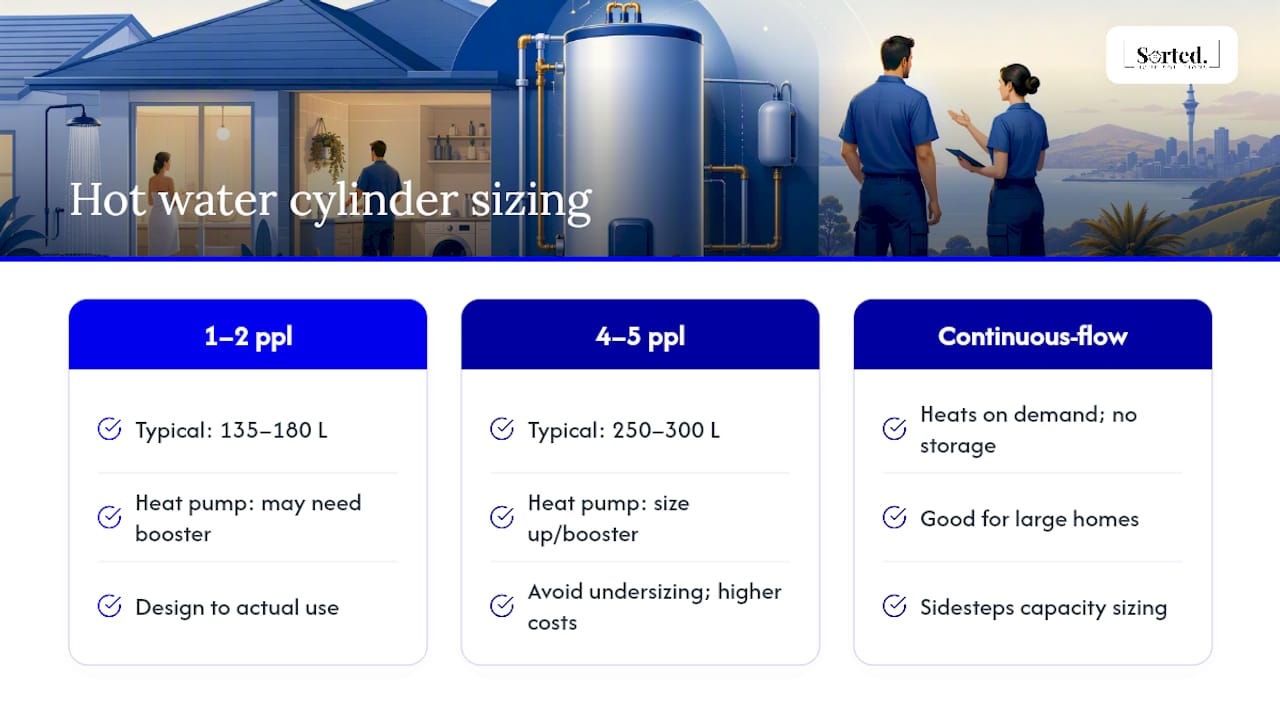
Heat pump cylinders complicate this slightly because recovery time, how quickly the tank reheats after use, is slower than a high-wattage electric element. That means a household with back-to-back showers might need to size up compared to an equivalent electric cylinder, or fit a system with a booster element for peak demand. Continuous-flow gas systems sidestep sizing altogether since they heat on demand rather than storing a fixed volume, which is worth considering for larger households or homes with unpredictable hot water spikes.
Other factors worth checking before you commit to a size: how many bathrooms run simultaneously, whether you’re adding a spa bath or larger shower head, and whether the household is likely to grow. BRANZ recommends designing the whole system around actual use patterns rather than defaulting to a like-for-like replacement, since many older cylinders were undersized for how the home is used today. Undersizing is the single most common sizing mistake we see, it’s cheaper upfront but leads to daily frustration and higher running costs from more frequent reheating cycles.
Stainless steel vs copper: which cylinder material lasts longer?
Stainless steel and copper are the two dominant tank materials in New Zealand, and the choice affects both lifespan and price.
Stainless steel cylinders resist corrosion well in most New Zealand water conditions and typically carry longer warranties, often 10 to 15 years, making them the more common choice for mains-pressure installations. They handle higher pressures reliably and tend to be the default material specified for heat pump and solar cylinders.
Copper cylinders have a long track record in low-pressure gravity-fed systems and remain common in older homes. Copper conducts heat efficiently and performs well over decades when water chemistry suits it, but it’s more vulnerable to pitting corrosion in aggressive water conditions and generally isn’t rated for the same pressures as stainless steel tanks.
For most upgrade projects, especially anyone converting from low-pressure to mains pressure, stainless steel is the practical choice simply because it’s built and rated for the higher pressure environment. Copper still has a place in wetback systems and some low-pressure retrofits where the existing pipework and fittings are already copper-matched. Whichever material you choose, confirm the warranty terms cover your specific water supply, since some manufacturers exclude corrosion damage in areas with known aggressive water chemistry.
What happens to your old hot water cylinder?
Old cylinders don’t belong in general landfill, and most installers will factor removal into their quote rather than leaving you to sort it separately.
Steel and copper cylinders are largely recyclable, and many scrap metal recyclers around Auckland accept old tanks, sometimes paying a small amount for the metal content depending on size and material. Ask your installer upfront whether removal and recycling are included in the quoted price, since some operators charge a separate disposal fee if it isn’t specified.
If your old cylinder still holds water when removed, make sure the installer drains it fully before transport, both for safety and because most recycling facilities won’t accept a tank that hasn’t been emptied. Any wetback components or copper coils inside the old cylinder are also worth recovering separately, as copper often has resale value at scrap yards.
For anyone doing a broader renovation alongside the hot water upgrade, it’s worth checking whether your project already includes a waste management or skip bin arrangement that can handle the old tank alongside other demolition material, rather than arranging a separate collection just for the cylinder.
What actually matters when you upgrade your hot water cylinder
The conventional advice on this topic obsesses over the cylinder brand and barely mentions the pipework it connects to. That’s backwards. BRANZ’s own guidance on designing a water heating system makes clear that layout, pipe length, and insulation often deliver bigger practical gains than swapping one tank for a marginally more efficient one. We’d rather see a homeowner spend $300 insulating a long, exposed pipe run than agonise over which heat pump brand shaves an extra half a percent off its COP rating.
The second gap in most advice: nobody asks hard enough what happens in winter. A heat pump that performs brilliantly on a mild Auckland afternoon can disappoint through a cold Waikato July if it wasn’t sized for that. Ask installers for realistic seasonal performance, not brochure numbers.
Prioritise getting the system design right, correct sizing, sensible pipe runs, proper tempering, before you shop around on price. A cheaper cylinder poorly matched to your home costs more over ten years than a well-specified one installed properly the first time.
— Rudi
Get your hot water upgrade managed from quote to compliance
Coordinating a hot water cylinder upgrade often means juggling a plumber, an electrician, and sometimes a council consent application, all while trying to compare quotes that aren’t apples for apples. Certain services remove that juggling act by managing the whole job, plumbing, electrical work, and the consent process, through one point of contact.

That matters most when your upgrade involves more than a simple tank swap, say a heat pump retrofit needing new circuits, or a mains-pressure conversion touching pipework throughout the house. Rather than chasing separate trades and hoping their schedules line up, you get a coordinated team managing registered plumbers and certifying tradespeople, handling warranty paperwork, and keeping the project moving from first assessment through to code compliance certification. If your renovation plans extend beyond the cylinder itself, into a full bathroom or kitchen refresh, the same coordinated approach applies across the whole project, as seen in projects like this Randwick bathroom renovation.
If you’re ready to see what a managed hot water upgrade looks like for your home, get in touch through the full home renovation service to request an assessment and quote.
Sources
FAQ
Which hot water cylinder is best for a New Zealand home?
There’s no single best model. A correctly sized heat pump cylinder from the EECA MEPS-compliant list suits households prioritising running costs, while a mains-pressure stainless steel cylinder suits those wanting lower upfront cost and better shower pressure.
What regulations apply to installing a hot water cylinder in NZ?
Installations must meet Building Code clause G12, which requires stored water to reach at least 60°C daily and tempered delivery at 50°C for hygiene fixtures. Like-for-like replacements by an authorised person are often consent-exempt, but changing the heat source or adding a wetback usually needs council consent.
How long should a hot water cylinder last in NZ?
Most stainless steel cylinders carry warranties of 10 to 15 years, while copper cylinders often run 15 years or longer in favourable water conditions. Actual lifespan depends heavily on local water chemistry and whether the unit was correctly sized for the household.
How much does a plumber charge to replace a hot water cylinder?
Installed costs typically run from $2,500 for a straightforward like-for-like swap to $8,000 or more for a full heat pump conversion depending on electrical work and tank configuration. Get at least two written quotes, since access, pipework condition, and electrical capacity all shift the final price.
Recommended
Comments