

Bathroom Renovation Cost in Auckland: 2026 Budget Guide


Most Auckland bathroom renovations land between about $19,000 and $44,000, with a typical project near $28,000, according to 2026 Auckland figures from a builder-checking service. Cosmetic refreshes cost less. Full redesigns with layout changes and premium finishes can pass $80,000. This guide explains where your bathroom is likely to sit in that range, what moves the price, and what to allow for before you sign a contract.
TL;DR
Auckland bathroom renovations typically run 20% to 30% above the New Zealand national average.
A common Auckland range is $19,000 to $44,000. The wider range published for the city is $10,000 to $88,000.
Layout changes, tiling, waterproofing and consent are the biggest cost drivers. Keeping fixtures where they are is the biggest saving.
Tiled wet-area showers and extra sanitary fixtures need building consent in Auckland.
Hold back a contingency for hidden damage found after demolition. Do not spend it in advance.
Table of Contents
What a bathroom renovation costs in Auckland
Published figures vary because every provider defines “a renovation” differently. One includes only labour and fixtures. Another includes design, consent and a full waterproofing system. When you compare quotes, compare scope first and price second.
The Auckland-specific 2026 data puts most projects between $19,000 and $44,000, with a typical figure of $28,000. The same page gives a full spread of $10,000 to $88,000, which shows how much the finish level and the layout change the result.
The table below is a planning guide, not a quote. It groups projects by the type of work, using the range above as an anchor.
Type of project | What it usually involves | Planning position in Auckland |
Cosmetic refresh | New vanity, tapware, paint, lighting, sealant. Tiles and layout stay. | Lower end of the published spread |
Like-for-like renovation | Strip and replace fixtures, tiles and waterproofing in the same layout. | Around the typical $19,000 to $44,000 band |
Full renovation | Layout changes, moved plumbing, new drainage, premium tiles, custom joinery. | Upper end of the spread, and above it for high-end finishes |
If your budget sits well below the typical band, the realistic option is usually a partial upgrade rather than a stripped-back full renovation. That is covered below.
Why Auckland costs more
The 20% to 30% premium over the national average reflects local conditions: higher labour rates, tight demand for licensed plumbers and waterproofers, and an older housing stock where walls and floors often hide surprises. Consent processing also adds cost. The Auckland data lists council officer time at $201 an hour for residential officers, so a consent application that needs several rounds of further information can cost more than one lodged complete.
Partial upgrade, like-for-like or full renovation
The cost difference between these three approaches is bigger than the difference between a mid-range and a high-end tapware range. Decide which one you are doing before you choose finishes.
Partial upgrades
A partial upgrade changes the surfaces and fixtures that show, without touching the tiled wet areas or the layout. Typical jobs are a vanity and fixture swap, new sealant, touch-up painting and patch repairs, new lighting and a new extraction fan. This is the right option when the existing tiling is sound and has no sign of leaking.
If the shower walls are lifting, the grout is failing or there is a soft patch in the floor, a cosmetic refresh only covers the problem. Get it checked first.
Like-for-like renovation
A like-for-like job removes the old finishes, replaces the waterproofing, retiles and refits the same fixtures in the same positions. Because the plumbing and drainage do not move, this is the most predictable type of renovation and usually the best value for an older bathroom that works but looks tired.
Full renovation with layout changes
Moving the toilet, shower or vanity means new pipework, possible changes to the floor and drainage, and often a larger consent file. Premium or floor-to-ceiling tiling and custom vanity joinery add further cost. Our guide to bathroom plumbing layout explains which moves are cheap and which are not.
What drives the price up or down
Layout and plumbing
The single biggest lever is whether fixtures stay put. Relocating a shower or toilet involves a licensed plumber and drainer, floor work and more testing. Keeping the layout is the cheapest way to hold the total down.
Tiling and waterproofing
Tiling cost depends on tile size, pattern, the area covered and how flat the substrate is. Large-format tiles and full-height tiling look good but take longer to lay. Waterproofing is not where you save money: it is the part of the job that protects the structure of your house. Our pages on tile installation costs and bathroom waterproofing requirements cover rates and Building Code rules in more detail.

Fixtures and joinery
An off-the-shelf vanity is far cheaper than a custom one. A freestanding bath, wall-hung toilet or rain shower system costs more to buy and more to install, because wall-hung fixtures need framing and concealed cisterns.
Electrical and lighting
Extra circuits, heated towel rails, underfloor heating and recessed lighting all need a registered electrician. Deciding the lighting plan before the walls are closed up avoids rework. See our notes on bathroom lighting ideas.
Size is not proportional
A small bathroom is not proportionally cheaper. The same trades, the same waterproofing steps and the same fixtures are needed whether the room is 3 or 6 square metres. Expect the saving from a smaller room to be real but modest.
Finish level
Budget, mid-range and high-end finishes change the fixture and tile spend, but not the labour much. Spending more on tapware and tiles has a smaller effect on the total than moving the layout.
Building consent and compliance
Many bathroom jobs need no consent, but some common ones do. Auckland Council states that consent is needed for tiled wet-area showers and for additional sanitary fixtures, and that all work must comply with the Building Code. The same page says plumbing and drainage work is exempt from consent only when an authorised person carries it out.
When a consent is required, the council looks for detail. Its list of common requests for further information includes how the wall meets the fixture at tiled showers, how any nib wall is built and the pipe gradient. Missing details slow the application, and delay costs money.
At the end of a consented job you need a Code Compliance Certificate. Waterproofing is a central part of that paperwork, and a waterproofing producer statement (PS3) is normally part of the file. Keep it with your property records, because buyers and their lawyers ask for it. If you are adding a second bathroom, read our guide to drainage and consent for a second bathroom before you set a budget, as drainage is the line item that surprises people most.

Can you redo a bathroom for $5,000?
Only in a limited sense. In a standard bathroom, $5,000 will not cover a strip-out, waterproofing, retiling and new fixtures. It can cover a cosmetic update if the room is in good condition: a new vanity top or vanity, new tapware, fresh paint, new sealant, a better light and a quiet extraction fan. It may also cover replacing a single item, such as a shower unit, with the surrounding fittings.
If you are working to a small budget, spend it on the things that fail first: sealant, ventilation and any leaking taps or waste. Our vanity and fixture swaps, sealant refresh and touch-up painting cover these small jobs.
What adds value to a bathroom
Buyers notice a bathroom that is clean, dry, well lit and ventilated, and they ask about waterproofing records. The improvements that most reliably protect value are the ones that remove doubt: a correct waterproofing system with paperwork, sound tiling, a working fan and tidy sealant. Trend-led features matter less, and they date. Our look at bathroom trends for 2026 separates what is worth choosing from what to skip.
As a rule, spend on the fabric of the room first, then on the finishes you will see every day. Do not spend heavily on features that suit only one taste if you plan to sell within a few years.
How to keep the cost under control
Keep the layout. Leaving the toilet, shower and vanity where they are avoids plumbing and drainage changes.
Choose stock sizes. Standard vanities, shower screens and tiles cost less than custom or made-to-order items.
Tile the wet zones well, and consider less tile elsewhere. Full-height tiling everywhere raises labour and material cost.
Fix the scope before work starts. Variations during the job are the main reason final costs exceed quotes.
Allow a contingency. A 15% to 20% buffer is a common recommendation for rot, old repairs and other problems found once the walls are open. Treat it as separate from your base budget.
Do not cut waterproofing or licensed trades. Saving money here creates the most expensive failures later.
Our renovation cost calculator guide walks through how to build a budget with these allowances.
Questions to ask before you accept a quote
Is the price fixed, and what would trigger a variation?
Does it include design, waterproofing, tiling, plumbing, electrical and painting?
Who applies for building consent, and is the consent fee in the price?
Which trades are licensed, and who supervises them?
Will you receive the waterproofing producer statement and other paperwork at the end?
What happens if hidden damage is found?
A quote that lists provisional sums for tiles, fixtures or plumbing is a range, not a price. Ask for those items to be specified.
Our perspective
Most cost blow-outs we see come from three places: scope that was not fixed at the start, hidden damage that nobody allowed for, and several trades who are not coordinated. A bathroom involves a plumber, a drainlayer, a builder, a waterproofer, a tiler, an electrician and a painter. If they are booked separately, gaps between them cost time, and time costs money.
That is why we run the whole job through one team and one point of contact. We quote a fixed fee against an agreed scope, coordinate the licensed trades and manage the building consent process when it applies. We also offer tiered Grade A, B and C packages for bathrooms, so the level of finish is decided before work begins.
Our advice to owners is simple. Decide whether you need a refresh, a like-for-like job or a layout change. Keep the layout if you can. Never skimp on waterproofing. Ask for everything in writing.
— Rudi
Plan your Auckland bathroom with us
If you want a fixed-fee quote with all trades managed by one team, see our bathroom renovation service and browse recent Auckland bathroom projects. Our pricing page sets out the grade packages. Contact us with your plans and we will confirm the scope and price.
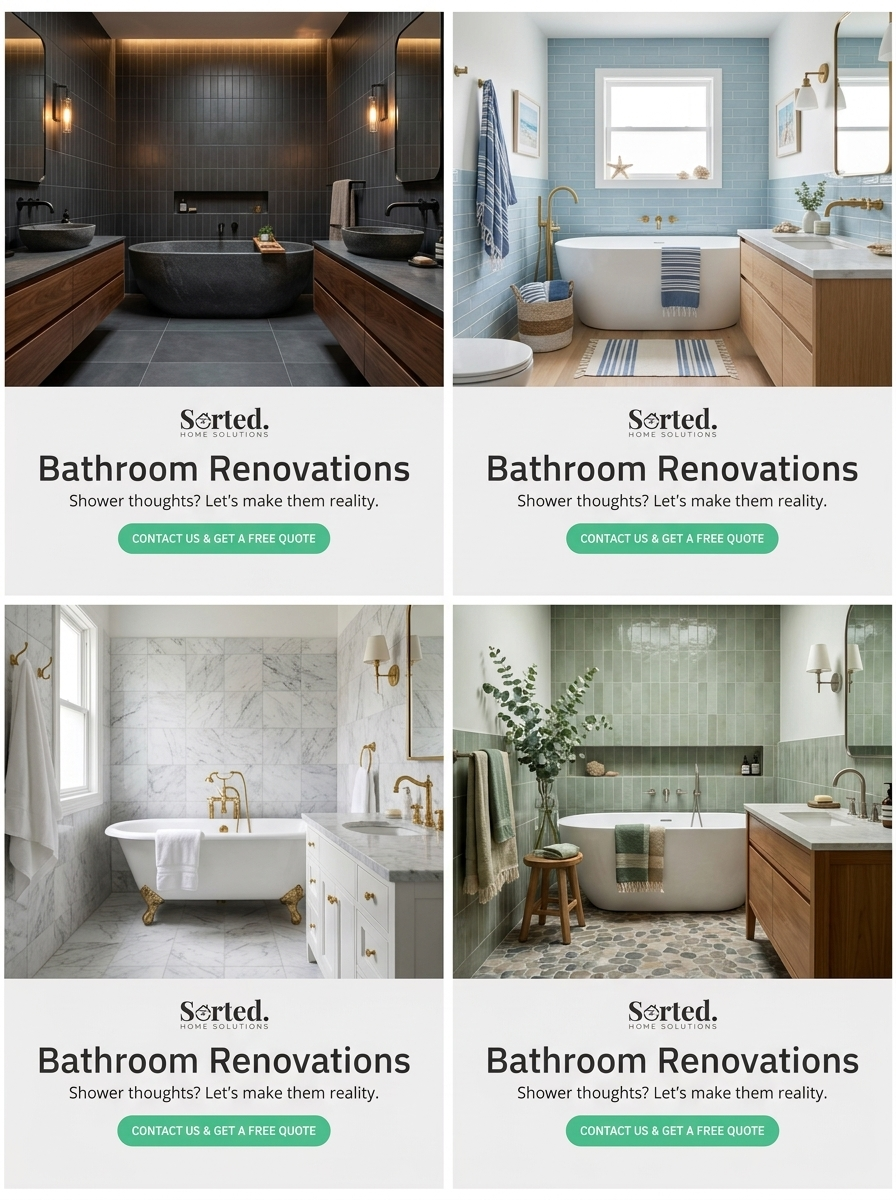
For smaller jobs, such as a vanity swap or a sealant refresh, see our small jobs and repairs page.
FAQ
How much does a bathroom renovation cost in Auckland?
Most Auckland projects fall between about $19,000 and $44,000, with a typical figure of $28,000 in 2026 city data. Cosmetic refreshes cost less, and high-end projects with layout changes cost more. Your final figure depends on scope and finishes.
Do I need building consent to renovate a bathroom in Auckland?
Not always. Auckland Council says consent is required for tiled wet-area showers and extra sanitary fixtures. Plumbing and drainage are exempt only when carried out by an authorised person. Check with the council or your contractor before work starts.
Why is Auckland more expensive than other regions?
Auckland bathroom renovations typically cost 20% to 30% more than the national average. Labour demand, older housing and consent processing all contribute.
How much contingency should I allow?
A buffer of 15% to 20% is a sensible allowance for problems that appear after demolition, such as rot or earlier poor repairs. Keep it separate from the base budget so you are not forced to cut waterproofing or other essentials.
Can I renovate a bathroom for $5,000?
Only as a cosmetic update. It can cover a vanity, tapware, paint, sealant and lighting in a bathroom that is in good condition. It will not cover a full strip-out, waterproofing and retiling.
Sources
Recommended
Comments