

Cracked Ceiling Repair in NZ: Causes, Costs and Fixes

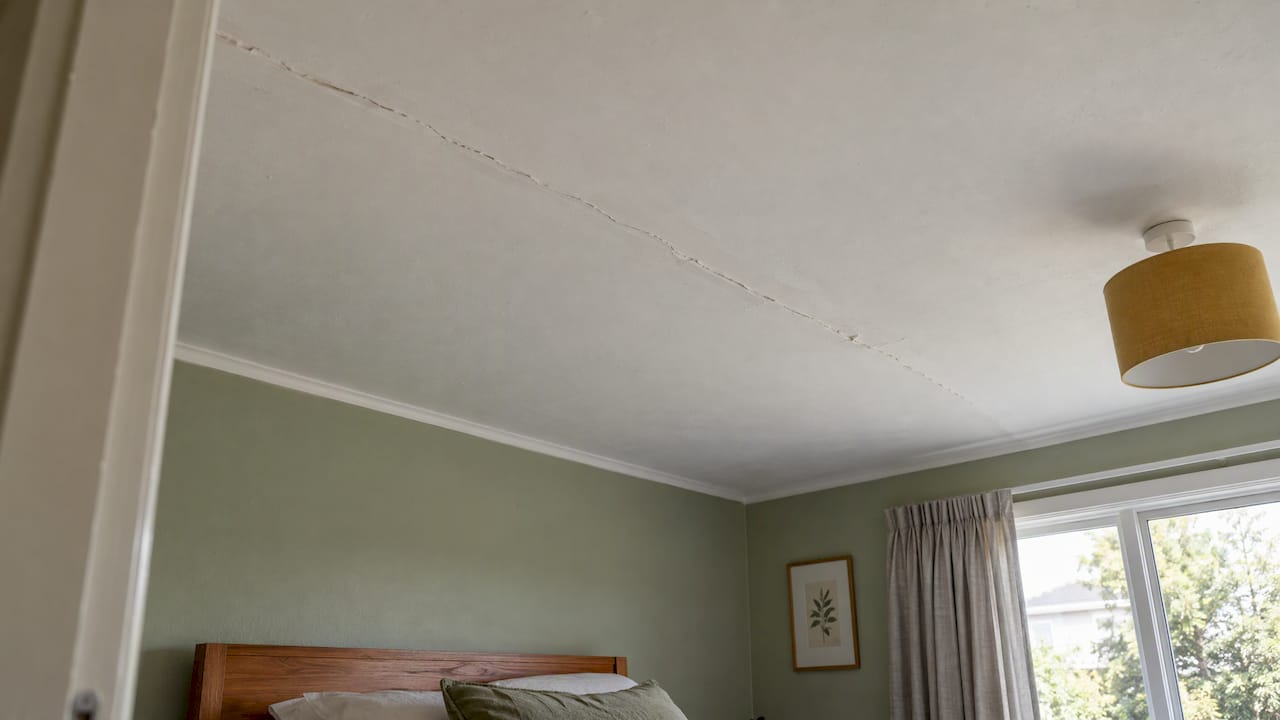
Most hairline ceiling cracks in New Zealand homes are cosmetic, but a repair only lasts if the cause is found first. Filling a crack that is still moving, or one that sits under a slow leak, gives you a fresh crack or a stain within months. The sound approach is to read the crack, fix the cause if there is one, then repair, seal and repaint the lining as one job. At Sorted Home Solutions we manage plastering, painting and every other trade involved under one point of contact, so you deal with one team instead of chasing several.
TL;DR
Thin cracks along joints and corners are common and usually cosmetic. Wide, irregular, sagging or stained cracks need assessing before anyone fills them.
A lasting repair means preparing the crack, filling in thin coats, sanding, sealing and repainting. Skipping the sealer is the usual reason a patch shows through.
A sudden crack, a sagging or bulging ceiling, or water near a light fitting is a safety matter. Keep people out of the room and get help straight away.
Compare quotes like for like: scope of work, who finds the cause, paint finish and what happens if the crack returns.
If the ceiling is part of a bigger job (water damage, a kitchen or bathroom renovation), one managed project costs you less effort than several separate trades.
Table of Contents
Are cracks in a ceiling normal?
Yes, small ones are. Most NZ homes have ceilings lined with plasterboard (often called GIB, after the main brand) fixed to timber framing. Timber shrinks, expands and moves with temperature and humidity, and the lining moves with it. EQC’s maintenance guide says timber shrinkage and expansion or contraction can cause cosmetic imperfections in ceiling linings.
The same guide lists other causes that affect how a ceiling looks:
too few fixings holding the lining to the framing
lining that is not tightly fitted to the framing
bent or twisted framing
pressure from someone standing on the ceiling lining in the roof space
In older homes with lath-and-plaster ceilings (thin timber strips with plaster over them), fine cracks in a web pattern are common. A builder quoted by QSPlus describes spider-web cracks that start at a point as usually nothing to worry about.
Quick read of the crack
What you see | What it often means | What to do |
Hairline crack along a joint or where ceiling meets wall | Normal movement of timber and lining | Cosmetic repair is usually enough |
Spider-web cracks in an older ceiling | Ageing plaster | Raking out and restopping, or relining if widespread |
Crack with brown stain or discolouration | Water getting in | Find and stop the leak first |
Crack that runs from the ceiling down the wall | Possible weak framing or movement | Have a Licensed Building Practitioner assess it |
Sagging or bowed ceiling | Lining or framing failure | Keep people out and get help straight away |
Cracks wider than about 5mm, doors or windows that no longer close | Possible settlement or structural movement | Assessment by an engineer |
The last three rows draw on the QSPlus article, which quotes a Builderscrack spokesperson on cracks that continue down a wall and bowed ceilings, and a Mainmark spokesperson on cracks wider than 5mm and sticking doors and windows.
When a ceiling crack is a warning sign
Three things turn a cosmetic job into something that needs assessing first: water, movement and sagging.
Water
MBIE’s guidance on plasterboard and flooding says water can discolour plasterboard and damage the elements behind it. It also warns that damage may reach insulation, wiring, building paper, cavities or connections, not just the visible surface. A crack with a stain around it, a damp patch or a ceiling that feels soft deserves a proper look in the roof space and above the room, such as a bathroom upstairs.
If the leak comes from the roof, repair costs depend on the roof itself. This roof repair cost breakdown gives a sense of how roof work is itemised.
If water is dripping near a light fitting, turn the power off at the switchboard if it is safe to do so, as Semplicita’s repair guide advises, and call a licensed electrician.
Movement
MBIE notes that foundation settlement can cause cracks at corners or junctions, and recommends seeking an engineer’s guidance if signs of such movement are present. A pre-purchase inspection guide from Red LBP makes a similar distinction: small cracks at corners or joints can follow settlement, while wider, irregular cracks may be associated with framing or foundation movement.
If you are buying, this matters. A first-time buyer who sees fresh paint over an old crack line has good reason to ask what was repaired and why. Our article on what building warranties in NZ actually protect you from explains how cover works once you own the house.

Sagging
Keep people out of a room where the ceiling is sagging or bulging, and get help straight away if a ceiling cracks suddenly. This is the safety advice in the Semplicita guide, and it applies before any question of cost or finish.
Why the cause comes before the patch
The Semplicita guide says recurring cracks should be investigated for movement or leaks before patching, because a cosmetic repair over an active cause can crack or stain again. That is the most useful single rule in this article. A crack that has been filled and reopened twice is telling you the filler was never the problem.
Some homes have more going on than a ceiling. Moisture under the house, for example, can raise humidity and affect linings above. If that sounds like your home, read our guide to subfloor moisture repair in NZ. If you see cracks around doors and floors that dip, our page on sagging floor repair in NZ covers causes and who to call.
Older homes bring another check. Some ceiling products and textured coatings in houses of certain ages contain asbestos, and disturbing them is a health risk. Before anyone sands or scrapes an older ceiling, read what to check about asbestos in NZ homes before you renovate.
How a ceiling crack is repaired properly
A good repair is a sequence. Each step exists because skipping it shows later. Where the work is done by a trade team, each step is part of the quote. Here is what the sequence involves.
Protect the room. Floors and furniture are covered, because sanding produces fine dust that travels. A New Zealand repair guide lists this first, along with clearing loose debris.
Prepare the crack. Loose pieces are trimmed back and the surface wiped clean. The Elephant Plasterboard installation guide (May 2026) describes trimming loose material and wiping clean before filling.
Tape and fill. Minor cracks are taped, then filled with jointing compound in thin coats. A thick single coat shrinks and cracks as it dries. A second coat is added if needed.
Sand smooth. Once dry, the filled area is sanded flush, with the edges feathered into the surrounding ceiling.
Seal. Resene’s interior wallboard specification says repaired areas and bare substrate are sealed with a wallboard sealer or quick dry primer before topcoats. This is the step that stops the patch showing as a dull or flat spot under the paint.
Repaint. The Elephant guide says to allow 12 to 18 hours before top coats, and up to 36 to 48 hours in humid or cold weather, and to use a 10mm nap synthetic roller for the final coat. Painting the whole ceiling, not just the repair, gives an even finish.
The timing in step 6 is why a ceiling repair is rarely a one-hour job. Filling, drying, sanding, sealing and two coats of paint stretch over more than one visit, and a trade that arrives once and leaves will have rushed a step.
What a patch cannot fix
For lath-and-plaster ceilings, the Winstone Wallboards bulletin sets out three options by severity: rake out and restop minor cracks, patch areas where plaster has fallen out with plasterboard, or remove and reline ceilings with major drummy areas (loose, hollow-sounding plaster), damage or plaster fallout. It also says the structure and the extent of lining damage should be investigated before repairs. That is why a quote for a whole ceiling should follow an inspection, not a guess from a photo.

What does ceiling crack repair cost in NZ?
Price depends on the size of the job, not the length of the crack. The factors that move it are:
Access: a bedroom is simpler than a stairwell or high stud ceiling that needs scaffolding or a tower.
Cause: a cosmetic fill costs far less than a repair that involves leak tracing, replacing wet plasterboard or reinforcing framing.
Extent: one crack, several cracks or a whole ceiling that needs relining.
Finish: repainting the repair only, a full ceiling or the whole room.
Texture: matching a stipple or textured ceiling takes more time than a flat one.
One New Zealand repair guide estimates $50 to $100 in materials for small cracks. That covers materials only, not labour, access, paint or the cost of finding the cause. For a firm price on your ceiling, a fixed-fee quote after a site visit is the reliable route, which is how we quote.
What to check before accepting a quote
MBIE’s guidance on choosing a building practitioner is to get a written agreement, ask for references, and compare quotes like for like, including materials and whether subcontractors’ work is accounted for. For a ceiling, that translates into these questions:
Does the quote say what caused the crack? A quote that only says “fill and paint” has skipped the diagnosis.
Is the scope written down? Preparation, number of coats, sealer, repaint area and rubbish removal should all be listed.
Who is doing the work? If wet plasterboard is replaced or framing is altered, ask whether a Licensed Building Practitioner is involved. MBIE recommends consulting an engineer, designer or Licensed Building Practitioner before removing large areas of plasterboard or doing repairs, and checking with your insurer and council that the plan meets coverage and legal requirements.
Is the price fixed? An hourly rate with open-ended materials makes it hard to compare two quotes.
What happens if it cracks again? Ask for the guarantee in writing.
Who coordinates the trades? If the crack came from a leak, you may need a roofer or plumber, a plasterer, and a painter, in that order.
If you are insured, tell your insurer before work starts on anything caused by water, so the repair does not affect a claim.
Promo: one team from diagnosis to paint
Ceiling repairs rarely involve one trade. A plasterer fills, a painter finishes, and if water is the cause, a plumber or roofer is needed first. We manage all licensed trades with one point of contact, and we work to fixed-fee quotes. Our Touch-Up Painting and Patch Repairs service covers smaller jobs, and where water damage is behind the crack, our Full Home Reno and Flood Restoration service handles the whole project, including the building consent process where one is needed.

If a ceiling is one of several jobs, such as a kitchen or bathroom update, it makes sense to scope it together. Our kitchen and bathroom packages are tiered by grade, and the ceiling repair can sit inside the same project rather than as a separate booking.
Our view
Most of the ceiling calls we hear about start the same way: someone has filled a crack and it has come back. The filler was fine. What was missing was a look at why the ceiling moved or got wet. We think a ceiling repair should be quoted in two parts: what caused it, then what it takes to make good. If the cause is cosmetic, the repair is plastering, sealing and painting. If it is water, the leak is fixed before any lining is touched. That is why we run all trades through one team and one point of contact. You should not have to brief a plasterer, a painter and a plumber separately and hope they arrive in the right order. We handle that, and we hold to a fixed-fee quote and a service guarantee. If you are a first-time buyer who has just noticed cracks in your new home, a calm, written scope is the best first step. Rudi
FAQ
How much does it cost to have a ceiling crack repaired?
It depends on access, the cause and how much of the ceiling is repainted. Materials for a small crack are a small part of the cost, with one guide estimating $50 to $100 for materials alone. Labour, drying time between coats and repainting make up most of a professional price, so ask for a fixed-fee quote with the scope written out.
Is it normal to have small cracks in the ceiling?
Yes. Timber framing shrinks and expands, and the plasterboard lining moves with it, which EQC lists as a cause of cosmetic imperfections. Thin cracks along joints and corners are the typical pattern. Cracks that are wide, stained, sagging or that run down the wall should be assessed.
Can a cracked ceiling fall down?
A sagging or bulging ceiling can be unsafe. Keep people out of the room and get help straight away. A sudden new crack deserves the same urgency. A hairline crack along a joint is not a sign of collapse.
How long should I wait before painting over a repair?
The filler needs to dry fully before sanding and sealing. The Elephant Plasterboard guide says to allow 12 to 18 hours after the sealer undercoat before top coats, and up to 36 to 48 hours in humid or cold weather. This is why a ceiling repair takes more than one visit.
Sources
Recommended
Comments