

Renovation budget contingency: how much to set aside


Set aside 10% of your project subtotal for straightforward renovations, 15–20% for older homes or major structural work, and 20% or more for projects with real unknowns (sloping sites, heritage materials, extensive demolition). Your first move isn’t spending it. It’s protecting it.
Do this today:
Add contingency as its own line item, separate from materials and labour.
Keep the funds untouched until a defect or change genuinely requires them.
Require written sign-off before any contingency dollar is released.
Key Takeaways
Point | Details |
Set the right baseline | Use 10% for simple work, 15–20% for older homes, and 20%+ for major structural jobs. |
List it as its own line | Never fold contingency into materials or labour; keep it visible and separate. |
Hold funds in reserve | Don’t spend contingency early; release it late if the project finishes surprise-free. |
Track every drawdown | Log requested changes, costs, approvals, and funding source before paying. |
Get professional help | Sortedhomesolutions builds contingency into fixed-fee quotes with tracked change orders and one point of contact. |
Table of Contents
What is a renovation budget contingency and why every project needs one
When to use contingency, and when to stop and get new quotes
Timeline impacts: when contingency covers a delay versus a scope change
How to talk to your builder, partner, and lender about contingency
Tools for tracking contingency alongside your renovation budget
How Sorted Home Solutions helps you set and manage contingency
What is a renovation budget contingency and why every project needs one
A renovation contingency is money you set aside specifically for the unknowns your quote can’t price. It’s not a buffer for changing your mind about tapware. It’s there for the things nobody can see until the walls come off: rotten framing behind the shower, wiring that fails inspection, a consent officer who wants an extra report.
Contractors build “provisional sums” into contracts for exactly this reason. They’re best guesses for work that can’t be finalised until the job is underway. Every provisional sum is a place your contingency budget might get called on.
In New Zealand, building consent fees alone commonly run between $1,500 and $5,000 depending on council and project scope. That’s before any surprise inspections or amended consent applications, both of which are common on older properties.
Contingency typically covers:
Hidden structural or moisture damage found once linings come off.
Consent variations or additional council-requested reports.
Delays that push trades into higher-demand periods.
Provisional allowances that come in over the builder’s estimate.
How much contingency should you budget for a renovation?
The percentage isn’t arbitrary. It scales with how much of your house is a mystery until the tools come out.
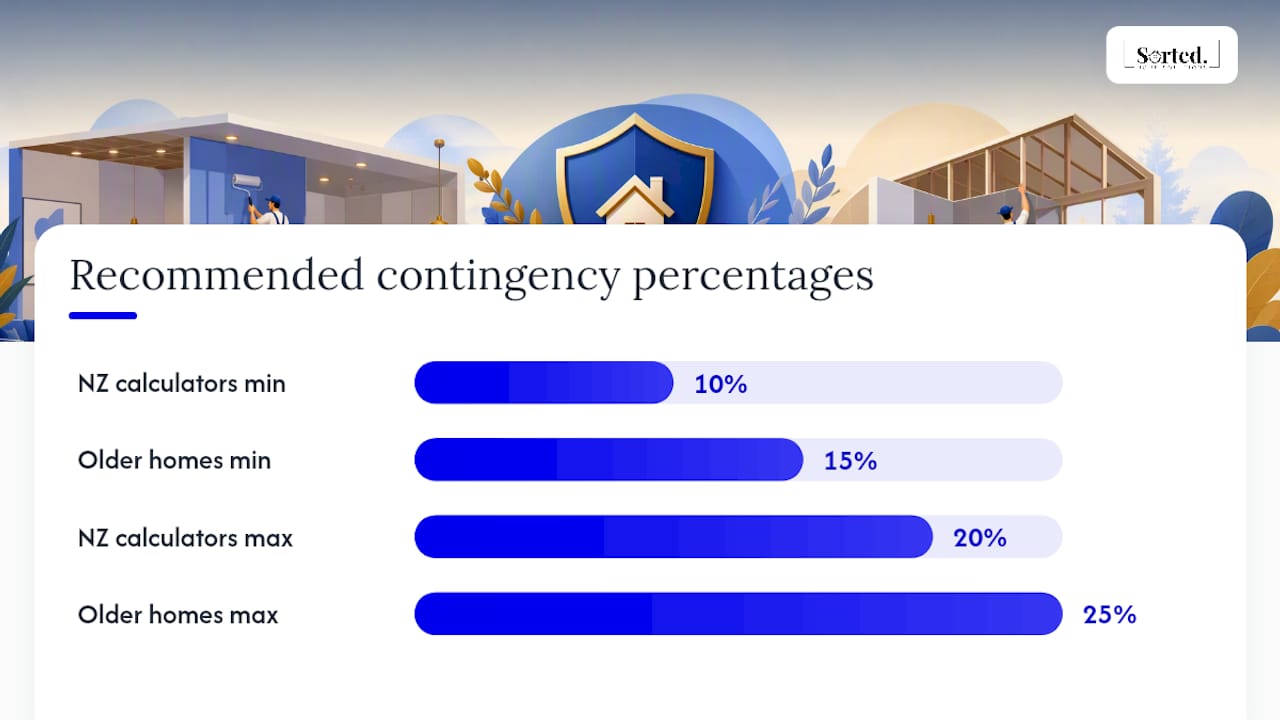
NZ renovation budget calculators generally recommend 10–20% of the project subtotal, with the higher end reserved for older houses and structurally significant work.
Once you’re opening walls in a home built before 1990, push that up. Contingency guidance for major renovations of older homes puts the right range at 15–25%, because hidden rot, outdated wiring and code-compliance upgrades become far more likely once you’re inside the wall cavities.
Raise your contingency percentage when any of these apply:
The house was built before 1990, especially pre-1970s.
The scope involves opening walls, floors, or ceilings.
You’re on a cost-plus contract rather than fixed price.
The site is sloping, has drainage issues, or sits on reclaimed land.
Pro Tip: Split your contingency mentally into two buckets: “known unknowns” (the plumbing you suspect needs replacing, the asbestos you’re 80% sure is under the lino) and “unknown unknowns” (the stuff nobody could have predicted). Price the known unknowns roughly into your subtotal if you can, and let the contingency line absorb the genuine surprises.
Common hidden costs that eat into your contingency fund
Some surprises show up on almost every renovation older than a few decades. Knowing the usual suspects helps you judge whether a quote is realistic or optimistic.
The repeat offenders:
Rotten framing or subfloor timber discovered once cladding or flooring is removed.
Asbestos in linings, textured ceilings, or old vinyl, which needs licensed removal.
Ageing wiring that fails inspection and needs partial or full rewiring.
Old plumbing (galvanised pipe, cast iron stacks) that crumbles once disturbed.
Additional consent conditions or engineer reports requested mid-project.
Bathroom renovations illustrate the spread well. Costs commonly range from around $10,000 for a budget job to $45,000-plus for a high-end fit-out, with consent fees typically landing between $1,500 and $5,000 on top. A mid-range job usually has more room to absorb it.
How to calculate and track your renovation contingency
Getting the number right matters less than showing it clearly and controlling how it’s spent. Here’s the method:
Build your full subtotal. Add materials, labour, provisional sums, consent fees, and any project management fees together.
Apply your contingency percentage. Multiply the subtotal by your chosen rate (10–20% per most NZ budget calculators) and list it as a standalone line, never folded into another category.
Track every drawdown against a change-order log. Record what was requested, the cost estimate, who approved it, and the date.
A simple sample budget for a mid-range bathroom renovation might look like this:
Keep this structure in a shared spreadsheet or your contractor’s project tracker, and don’t let contingency get absorbed into “miscellaneous.” A renovation cost calculator can help you build a realistic subtotal before you even get quotes, which makes the contingency percentage meaningful rather than a guess on a guess.
How to reduce how much contingency you’ll actually need

You can’t eliminate uncertainty, but you can shrink it before the first hammer swings.
A pre-inspection walk-through with your builder, plumber, and electrician catches a surprising amount before contracts are signed. If the project involves structural changes or a large budget, a quantity surveyor’s estimate is worth the fee. It replaces guesswork with a properly priced scope. Fixed-price quotes, where the contractor absorbs more of the pricing risk than in a cost-plus arrangement, also reduce how hard your contingency has to work.
Clear scope documents matter just as much. A detailed written contract that spells out what’s fixed price and what’s a provisional sum stops disputes before they start.
Get a pre-inspection from your builder, plumber, and electrician.
Commission a quantity surveyor’s estimate for large or structural jobs.
Insist on fixed-price quotes wherever the scope allows it.
Define provisional sums explicitly, with a cap where possible.
Pro Tip: Ask for a contract clause that ties staged payments to completed milestones, not calendar dates. It protects your cash flow if delays happen, and it protects your contractor’s cash flow if you’re slow to approve a decision.
When to use contingency, and when to stop and get new quotes
Not every overage deserves the same response. A $300 variance on tiling doesn’t need a formal quote process. A $9,000 structural repair does.
Anything above that pauses work until a written change order and new quote are signed. Even under a fixed-price contract, it pays to hold a personal contingency of at least 10% for site conditions the contract doesn’t cover.
Quick-decision checklist for small overages:
Is it under your agreed dollar threshold? Approve and log it.
Does it change the structural scope? Pause and get a new quote.
Has the contractor documented it in the change-order log? Confirm before paying.
How Sorted Home Solutions manages contingency for clients
Sortedhomesolutions builds contingency into the process from day one, not as an afterthought once a defect turns up. Every quote separates fixed-price items from provisional sums, so clients see exactly what’s locked in and what could move.
The approach in practice:
A scoped, written quote with contingency shown as its own line item.
A single point of contact managing every trade, so nothing gets lost between subcontractors.
A tracked change-order log for every contingency drawdown, with homeowner sign-off required.
Staged payments tied to project milestones, not arbitrary dates.
The benefit for homeowners is fewer nasty surprises and one contract to manage instead of five. If you’re weighing whether to project-manage a renovation yourself or bring in full-service oversight, this is often where the real cost difference in renovate versus rebuild decisions shows up. Fewer gaps mean less contingency actually gets spent.
Timeline impacts: when contingency covers a delay versus a scope change
Contingency money and contingency time aren’t the same thing, and conflating them is where a lot of renovation stress comes from.
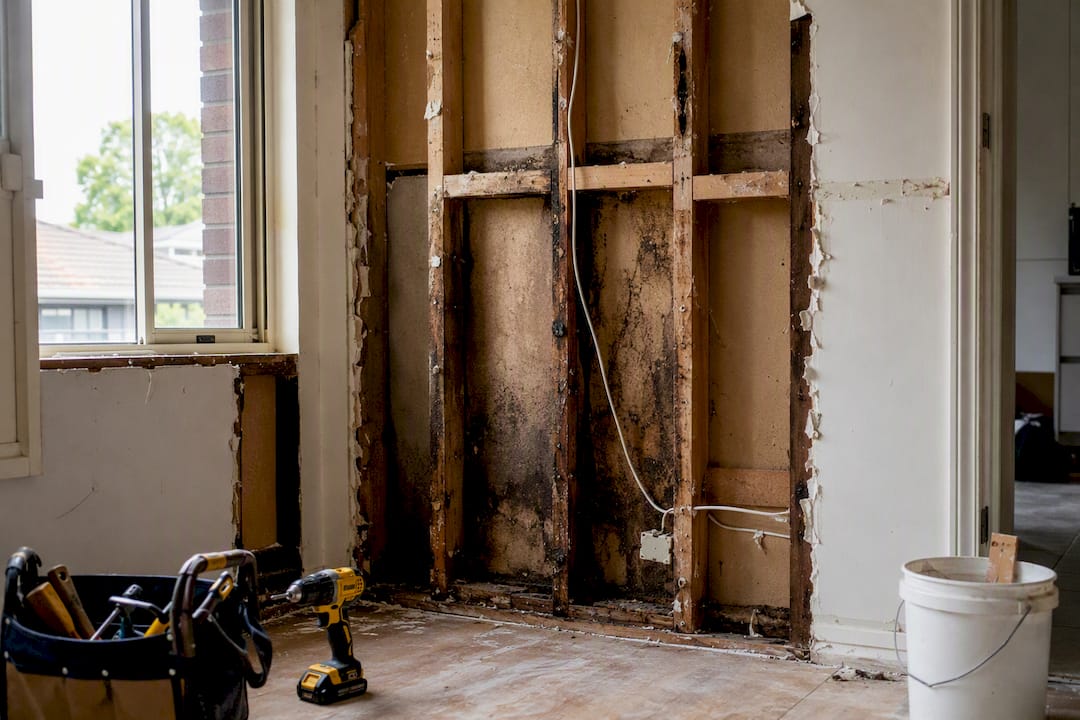
A short delay caused by a supplier being two weeks late doesn’t usually need a scope change. It’s an inconvenience, and it might not touch your contingency budget at all beyond some minor holding costs. But once a delay is caused by discovering something that changes the actual work (a rotten wall plate that needs structural repair before framing can continue) you’ve crossed from “delay” into “scope change.” That’s the moment to pause, not push through.
The rule of thumb worth keeping in your head: if the fix can be quoted and approved within a day or two without new trades being brought in, contingency covers it and work continues. If it needs a new trade, a revised consent, or a price that wasn’t in the original scope, stop and get it properly quoted before authorising the spend.
This matters because contractors under pressure to keep a timeline moving sometimes make decisions on the fly that should have gone through approval first. A clear rule, agreed before the project starts, removes that pressure. Everyone knows in advance what triggers a pause versus what’s a same-day call. It also protects the relationship between homeowner and builder, because nobody is guessing what the other party expects when a surprise turns up on a Tuesday morning.
Renovations on older homes are more likely to hit this fork in the road, simply because more of the building is unknown until it’s opened up. Budgeting extra time buffer alongside your dollar contingency, not just money, saves a lot of friction later.
How to talk to your builder, partner, and lender about contingency
Contingency only works as a safety net if everyone involved agrees on the rules before money is spent, not after.
With your contractor, get the contingency percentage and the approval threshold written into the contract, not just discussed verbally. Ask how they’ll notify you of a contingency-triggering discovery, and how quickly you’ll need to respond. A clear change-order and approval log prevents the classic dispute where a homeowner says “I never approved that” and a builder says “you saw it on site.”
With a partner or co-owner, agree in advance who has authority to approve contingency spend on the spot. Renovation decisions often need to happen fast, on site, sometimes while one party is at work. Nominate one decision-maker for amounts under your threshold to avoid delays waiting for a second signature.
If you’re financing the renovation, tell your lender the contingency figure upfront and where it sits in your loan drawdown schedule. It shows the budget has been stress-tested rather than optimistically rounded down. Some construction loans release funds in stages tied to build milestones, so your contingency plan should mesh with that schedule rather than sit outside it.
The through-line across all three conversations is the same: put the rules in writing before the first surprise, not during it.
Real-world examples of contingency in action
If the project runs clean, that money either stays unspent or funds a late-stage upgrade, like better bench tops once the homeowner sees the space coming together.
Pulling up the old vinyl floor reveals rotten subfloor timber, and the plumber finds galvanised pipe that needs replacing rather than reusing. Both items get logged as change orders, priced, and approved before work continues. In a case like this, the higher contingency band exists precisely because the age of the house made these discoveries likely, not exceptional.
A third pattern shows up on renovations involving consent variations, common in garage conversions or projects adding a bathroom where none existed. The consent process itself can trigger extra costs if council asks for an amended application or additional engineering input partway through. That’s a contingency use case that has nothing to do with the physical building work and everything to do with paperwork, but it draws from the same reserve.
What these examples share: the contingency wasn’t a slush fund for upgrades. It was there for the thing nobody could see until the work started, and it got used through a documented, approved process each time.
What to do with unused or insufficient contingency funds
Two outcomes are common at the end of a renovation: contingency runs out, or a chunk of it is untouched. Both need a plan.
If your contingency is fully used and more is needed, the answer isn’t to keep dipping into general savings without a conversation. Treat any request beyond the original contingency as a new, separately approved budget item, priced and signed off the same way a change order would be. This keeps a clear record of what the original renovation actually cost versus what got added afterward, which matters if you ever need that information for insurance, resale, or your own future budgeting.
If contingency is left over, resist the urge to spend it the moment you notice the balance. The soundest approach, backed by renovation planning guidance, is to hold it in reserve until the project is genuinely finished and confirmed surprise-free. Only then consider reallocating it toward an upgrade, better tapware, an extra power point, upgraded lighting, rather than releasing it early and having nothing left if a late-stage issue turns up.
Where reallocation within the same project makes sense: shifting unused bathroom contingency toward an over-budget kitchen line item, provided both are part of the same signed scope and the shift is documented. What doesn’t make sense is treating contingency as a general slush fund that quietly absorbs scope creep, an extra light fitting here, a splashback upgrade there, without anyone tracking that it’s happening.
Tools for tracking contingency alongside your renovation budget
A spreadsheet is still the most common tool homeowners use, and it works fine if it’s structured properly. At minimum, it needs columns for the original subtotal, the contingency amount, every change-order request, the approved cost, who signed off, and the running balance. Google Sheets or Excel handle this without any special features, and the simplicity means you’ll actually keep it updated.
For homeowners who want something more structured, dedicated construction budgeting tools and project management platforms built for renovations (rather than generic project management software) tend to include change-order templates and milestone-linked payment tracking out of the box. The value isn’t the software itself, it’s that it forces the discipline of logging every contingency draw at the point it happens, rather than reconstructing it from memory at the end.
Whichever method you use, the non-negotiable fields are the same: what was requested, what it cost, who approved it, and which budget line funded it (contingency or additional funds). A renovation cost calculator is useful earlier in the process for building your initial subtotal, but once work starts, the tracking tool that matters most is whichever one you’ll actually update every time a decision gets made on site.
A quick perspective on contingency and ambition
Hold contingency in reserve, not in anticipation. If the project finishes clean, upgrade then, not before. The habit that protects your budget more than any percentage is logging every decision against that line the day it happens.
How Sorted Home Solutions helps you set and manage contingency
Sortedhomesolutions gives you one fixed-fee contract, one point of contact, and a contingency line item you can actually see, instead of chasing five separate trades to find out who’s blown their allowance. Scope-defined quotes separate fixed-price work from provisional sums upfront, and every contingency drawdown gets logged and approved before it’s spent, so you’re never surprised by an invoice.

If you’re at the planning stage, the renovation cost calculator is the right place to build a realistic subtotal before you set your contingency percentage. If you’re ready to see what a full-service renovation looks like in practice, browse the Auckland renovation gallery or check kitchen and bathroom pricing to get a scoped quote with contingency built in from the start.
Frequently asked questions
What percentage should I budget for a renovation contingency?
Is a renovation contingency the same as a provisional sum? No. A provisional sum is a priced estimate for specific work that can’t be finalised until the job starts. Contingency is a separate reserve for the unknowns that fall outside any quoted item.
Can I get my contingency money back if it’s not used? Yes. Unused contingency should stay in reserve until the project is confirmed complete, then it can go toward a late-stage upgrade or simply be returned to your savings.
Do fixed-price contracts still need a contingency? Yes.
Who approves spending from the contingency budget? The homeowner, ideally through a written change-order process where the contractor documents the cost and gets sign-off before proceeding, not after the invoice arrives.
This article is general information, not a substitute for advice from a qualified financial advisor. Consult a qualified financial professional about your own circumstances before acting on anything here.
Sources
Recommended
Comments