

Best paint finishes for bathrooms: a room-by-room guide

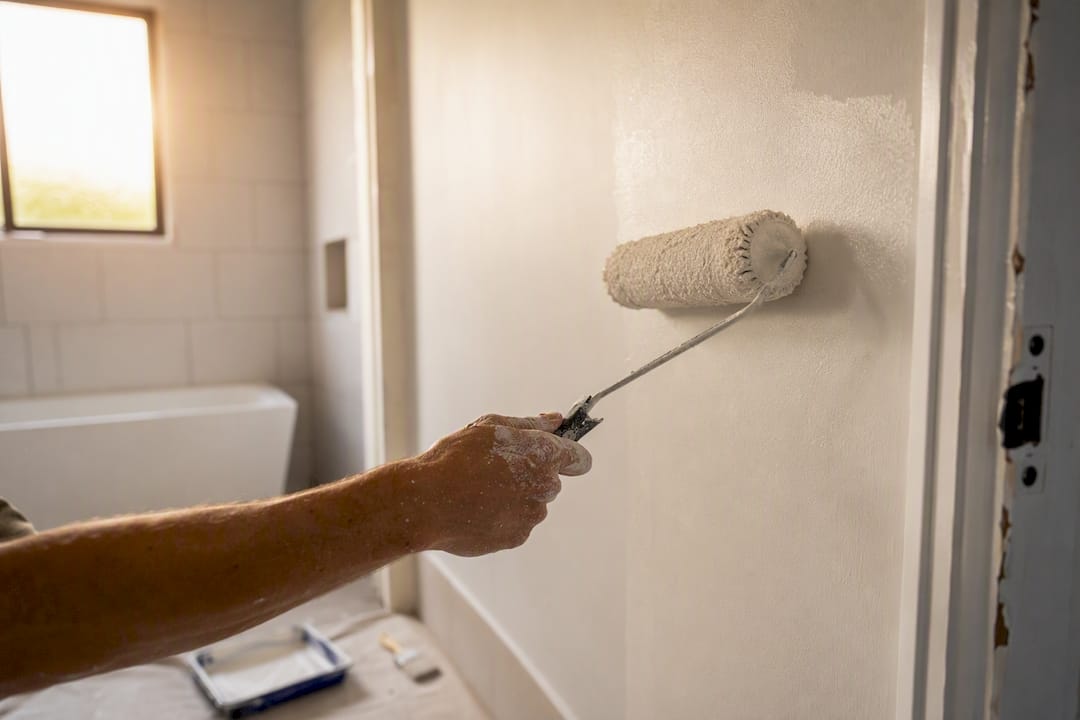
Use bathroom-rated kitchen and bathroom paints: low-sheen for walls, flat for ceilings, and semi-gloss for trims, all paired with proper ventilation. Products like Resene SpaceCote and Dulux Wash&Wear +PLUS Kitchen & Bathroom are built with mould inhibitors that ordinary interior paint doesn’t have. None of it lasts, though, without a decent extractor fan and correctly primed surfaces underneath.
TL;DR:
Proper ventilation is crucial to maintaining paint durability, as moisture buildup from condensation is the main cause of early failure.
Low-sheen bathroom-rated paints with mould inhibitors are recommended for walls and ceilings, with semi-gloss or enamel for trims and joinery.
Painting over glazed tiles or wet surfaces such as shower interiors is unreliable; retiling or specialized coatings are necessary for durability.
Surface preparation, including mould removal, cleaning, sealing, and drying, is the most important factor for long-lasting bathroom paint jobs.
A professional renovation may be required if there is hidden water damage or structural issues beyond superficial repainting.
Table of Contents
Best paint finishes for bathrooms at a glance
Matching the right finish to the right surface saves you a repaint in two years. Here’s the quick version before we get into the reasoning:
Walls: a low-sheen, bathroom-rated topcoat. It resists moisture and wipes clean without the glare of full gloss.
Ceilings: a bathroom-rated flat finish. Flat hides ceiling imperfections and skim-coat lines while still carrying mould-resistant additives.
Trims, doors, and joinery: semi-gloss or enamel. These surfaces get touched constantly, and a harder sheen shrugs off fingerprints and steam far better than a soft one. For more on choosing the ideal finish, see What is the Best Sheen for Interior Doors? | One Day Doors & Closets.
Splash zones and cabinetry: specialist enamels where appropriate, but never paint over a shower’s tiled interior. Paint can’t bond reliably to constantly wet, glazed surfaces, and it will fail.
Each of these fits into the same family of bathroom-rated kitchen and bathroom paints rather than standard wall paint dressed up with a “moisture-resistant” sticker.
How sheen affects performance in a bathroom
Sheen is really a measure of how much light a paint film reflects, and that has practical consequences beyond looks. Flat and matt finishes scatter light and hide surface flaws, but their more porous film traditionally held onto moisture and grime. Low-sheen and eggshell sit a notch up, offering better wipeability with only a slight reflective hit. Satin adds more shine again, and semi-gloss and full gloss form the hardest, most washable films but show every stray roller mark and ceiling ripple in raking light.
The eggshell vs satin bathroom debate has largely been resolved by better formulation rather than by picking a winner. A decade ago, you needed satin or semi-gloss on bathroom walls to get real washability. Modern waterborne enamel low-sheen products, like Dulux Wash&Wear +PLUS, close much of that gap. You get a softer, less reflective wall with wash-and-wipe performance that used to require a shinier finish.
Where does gloss still earn its place? On skirting boards, door frames, and window sills, where scuffs and handprints are constant and a hard film wins every time. On broad wall areas, that same hardness turns minor plaster imperfections into a glaring feature under bathroom downlights.
Pro Tip: If your bathroom has patchy old plaster, test a low-sheen sample on the worst section of wall before committing. Satin and gloss will broadcast every flaw you were hoping the paint job would fix.
Surface-by-surface recommendations and practical tips
Different surfaces in a bathroom face different stresses, and the finish should follow the job, not just the look you’re chasing.
Walls. A low-sheen kitchen and bathroom formulation is the standout choice for most bathroom walls. Resene SpaceCote Low Sheen Kitchen & Bathroom includes MoulDefender and anti-bacterial silver technology, and it’s Environmental Choice and Sensitive Choice approved, which matters if anyone in the house has asthma or skin sensitivities. In a poorly ventilated bathroom with no window, lean toward the higher end of low-sheen, closer to satin, for extra wipe resistance.
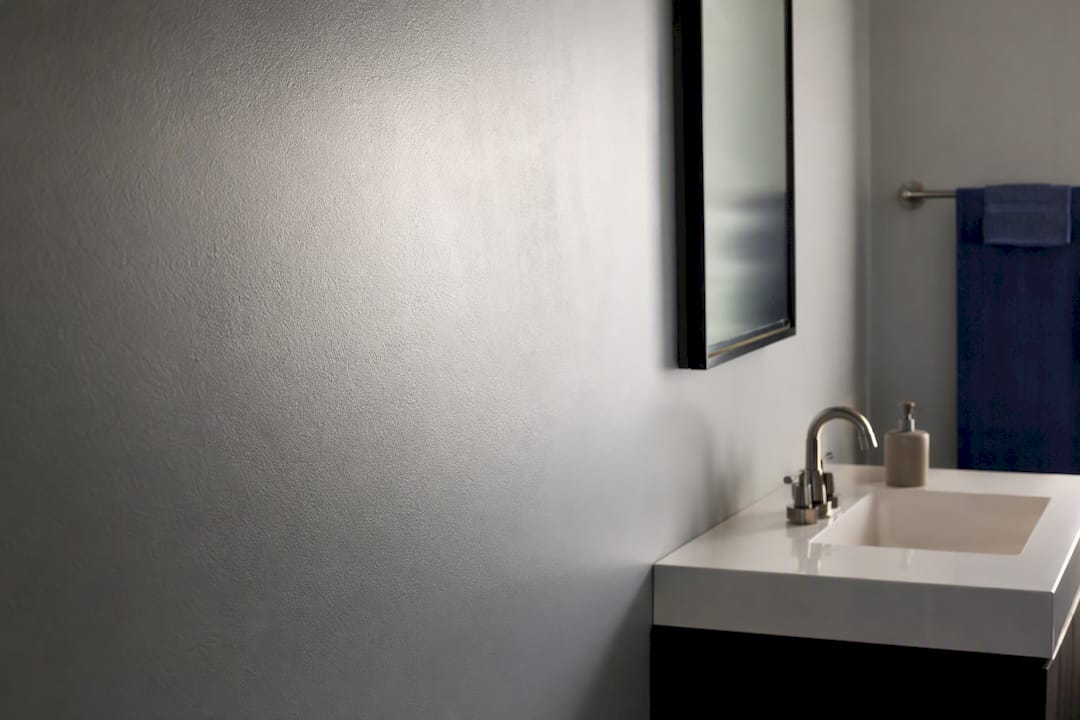
Ceilings. A flat, bathroom-rated ceiling paint such as Resene SpaceCote Flat Kitchen & Bathroom hides stopping lines and old water stains while still resisting the mould that steam-heavy ceilings are prone to.
Trims and doors. Semi-gloss or enamel, applied over a proper primer, gives you a surface that survives constant hand contact. Resene Lustacryl Kitchen & Bathroom is built specifically for this enamel-like durability on joinery.
Sand and degloss old enamel before repainting; new paint won’t grip a slick surface.
Prime bare timber or MDF trims separately from the wall schedule.
Cabinets and benchtops. Vanity cabinetry can take a semi-gloss enamel, but laminate benchtops usually need a specialist bonding primer first, or replacement altogether.
Tiled splashbacks and shower interiors. Don’t paint over glazed tile inside a shower recess. Adhesion fails in a wet, high-friction zone; retiling or a specialist tile-refinishing coating is the only durable fix.

Preparation, primers and sealers for wet areas
Paint failure in bathrooms is almost always a prep failure, not a product failure. Skipping these steps is the single biggest reason a “quality” paint job peels within a year.
Kill and remove existing mould first. Treat affected areas with a mould-specific cleaner and rinse thoroughly. Painting over live mould spores just seals in the problem.
Degrease and clean every surface. Soap scum and skin oils on bathroom walls stop paint from bonding, even when the surface looks clean to the eye.
Seal problem substrates. Resene Waterborne Sureseal is a pigmented penetrating sealer designed to prepare glazed surfaces, old varnishes, and other tricky substrates for a topcoat.
Check plasterboard and old enamel separately. New plasterboard needs a standard sealer undercoat; old glossy enamel needs sanding and a bonding primer before anything else goes on.
Respect dry times between coats. Rushing a second coat over an under-cured sealer is a common cause of early blistering, so follow the manufacturer’s datasheet rather than guessing.
Consumer Reports’ guidance on painting bathrooms backs the same sequence: clean, treat, prime, then topcoat, in that order, every time.
Ventilation and maintenance protect the paint job
Condensation, not the paint itself, is usually what kills a bathroom finish early. Steam settles on cool surfaces, and repeated wetting breaks down even a good paint film over a few years if it has nowhere to go. No topcoat fully compensates for a bathroom that can’t breathe, and industry guidance is consistent that ventilation matters more than sheen selection.
Run the extractor fan during and for 15 to 20 minutes after every shower, or fit one with a humidity sensor that does this automatically. Crack a window when you can, wipe down wet walls after bathing, and keep damp towels off painted surfaces. Check silicone joints and grout lines twice a year. Once they crack, water gets behind the paint film regardless of how good the topcoat is.
When DIY isn’t enough and a professional makes sense
A repaint is a weekend job. Hidden water damage behind tiles, extending beyond a bathroom’s original scope, or work needing building consent is a different problem entirely, and painting over it just delays a much bigger repair.
Sortedhomesolutions manages exactly this kind of project: coordinating plumbing, plastering, and painting trades under one point of contact, with fixed-fee packages so there’s no surprise invoice halfway through. If a “quick repaint” turns up soft plasterboard or a failing membrane, you want one team already across the whole job, not three separate quotes and a scheduling headache. Browse completed bathroom projects to see the standard of finish before deciding which route suits your bathroom.
Why the sheen debate misses the real problem
Homeowners spend a surprising amount of energy agonising over satin vs semi-gloss when the paint they’ve chosen was never the weak link. The research is fairly blunt about this: a top-shelf enamel applied over unsealed, mould-contaminated plaster will fail faster than a mid-range low-sheen paint applied over properly prepped, sealed substrate. Sheen is a finishing decision. Ventilation and preparation are structural decisions, and they get far less attention than they deserve.
The conventional advice usually leads with sheen charts and colour swatches, which is backwards. If your bathroom has no working extractor fan, fix that before you even choose a paint brand. If the walls have old mould stains, treat and seal them before worrying about whether Resene or Dulux suits your colour scheme better.
My honest read: pick a bathroom-rated low-sheen product from a reputable range, spend the real effort on prep and airflow, and the finish will look after itself for years. Get the order backwards and you’ll be repainting the same wall in eighteen months no matter what tin you bought.
— Rudi
A managed finish that resists mould, without the DIY guesswork
Sortedhomesolutions gives Auckland homeowners a fixed-fee alternative to piecing together a painter, a plasterer, and a plumber separately for a bathroom that’s showing damp problems behind the paint. Rather than guessing whether your substrate needs Sureseal or a full retile, one team assesses the job, handles the trades, and delivers a bathroom finish built to resist mould from the start.

If your bathroom needs more than a fresh coat of paint, whether that’s failing grout, a tired layout, or water damage you’d rather not paint over, view the bathroom renovation gallery and request an estimate through the full home renovation page to see what a properly managed bathroom project looks like from start to finish.
Where these recommendations come from
Product and application details in this guide come from Resene’s Kitchen & Bathroom range page and datasheets, the Dulux Wash&Wear +PLUS product page, Consumer Reports, and EPA indoor air quality guidance on VOCs.
Sources
Recommended
Comments